Origins and Extinctions Days
A proposal by
Roger A. Anderson*
*Site-building was completed on 6 February 2017; significant additions were made beginning in 2022, when it became obvious that this should be developed into a book; latest edits, also serving as precursor to a book, were made on 10 August 2025)
A barren future?
Or a resplendent future?
Declaring the need:
Given the confluence of major global challenges to Humankind and the Biosphere* and realizing that the solutions to those challenges require us to cognitively overcome biocultural impediments of our species (e.g., consider the rancorous sociopolitical discord), then we need a three-day, multi-faceted vanguard-event each year, Origins and Extinctions Days, when we 1) recognize the enormous value of biological and cultural diversity, 2) focus attention on the causes and consequences of so many cultures and species being threatened with extinction in an increasingly damaged Biosphere, and 3) seek ways to increase our prospects for retaining a resilient Biosphere, replete with thriving species and flourishing Humankind.
* The Biosphere is an integrated planetary system comprising all Biota and in which there are dynamic exchanges of air, water, and nutrients and between the Biota and the physical environments of bedrock and soil, fresh and marine waters, glaciers, ice sheets and the atmosphere.
We are in this together:
between origins and extinctions.
We can take the opportunity annually to congregate, celebrate and contemplate our cultural and biological heritage. We also can share our concerns about the survival of vulnerable cultures and species, and ultimately the survival of Humankind and the Biota. We can commit our considerable cognitive abilities to catalyze ethically corrective action across the Biosphere.
That is, Origins and Extinctions Days can become the paramount three world-wide days of celebration, contemplation, and calls to action.
They would be days for each of us to invigorate the efforts to teach others to learn and think about our biological and cultural origins, and to critically assess how to increase citizenry-wide valuing of cultural heritage, including the cultural heritage of others and the biological heritage of all creatures in the Biosphere. We then can provide encouraging voices and help model the actions to preserve our biological and cultural heritage.
We would motivate each other to think deeply and creatively about how to increase the prospects for our biological and cultural heritages surviving, and how to assist our evolving culture to improve and thrive in a Biosphere we are actively seeking to restore. We understand that our greatest challenge is achieving cooperation and collaboration of those who currently do not share our concerns. We realize they may have other immediate socioeconomic, political and ideological priorities, and that they may be duped by the misinformation and disinformation of the propaganda produced by plutocrats, kleptocrats and oligarchs who have enormous influence on political and socioeconomic outcomes. Indeed, about 75% of human populace lives under authoritarian control and more nations are under threat. Democracies will die and autocracies will arise when citizens succumb to nefarious entities who facilitate widespread, willful ignorance, bias and prejudice. These dystopian elements must be defeated. Among the changes needed across human cultures some may see as radical and off-putting, but the forward-thinking problem solvers more likely see these changes as sensible, salutary, ethical, compassionate and needed.
Clearly, one gathering or even annual events are not enough for such important and ambitious considerations, as indicated in Desired Outcomes, below. Moreover, a more in-depth Rationale and Encouraging Comments, is necessary and is provided below.
“Far and away the best prize that life offers is the chance to work hard at work worth doing.” Theodore Roosevelt
What should happen on Origins & Extinctions Days
A major in-person (likely with no external funding support) and on-line forum among public citizens is needed over three days in late November 2025 to serve as a springboard for action. We would 1) express the dread and frustration, even anger we feel about the looming extinctions of vulnerable cultures and species, the alarming, rapid advances in degradation across the Biosphere, and the major urgent problems facing society of every nation, and then, 2) not yield to the looming doom by using love we have for Humankind, the Biota and the Biosphere to catalyze highly motivated deliberation about the deeply entrenched causes of these major challenges, and then 3) use solidarity-inspiring resolve to explore, develop and extoll exhilarating promises of myriad new avenues to solutions.
The forum would require the collective knowledge and wisdom of working groups of accomplished, dedicated educators, sociologists, economists, political scientists, historians, anthropologists, evolutionary psychologists, moral philosophers, evolutionary biologists and ecologists, and a variety of other public citizens, including other public intellectuals (not all are in academia) and activists humbly integrating as a veritable proactive cooperative. These prospective, accomplished, highly capable participants (considerable expertise, but not elitist in attitude) understand that many in the citizenry (the “precariate”) find it worrisome or difficult to trust those individuals in positions of power and responsibility in the legislative, administrative or judicial branches of government. Contributing to this distrust were problematic actions and events such as 1) offshoring of manufacturing in the U.S. (and those of other western democracies), 2) the world-affecting crash of the U.S. housing finance bubble in 2008, and 3) recent freedom-restricting, authoritarian-empowering U.S. Supreme Court decisions. Much evidence shows that these harmful events, which have affected all nations, can be credited to the wealthy-and-powerful, libertarian-leaning conservatives in the U.S.A. The ultra-rich economic elite have increased their wealth, power and control, but the citizenry has been harmed. The skepticism and despairing of the citizenry about expertise has been directed away from the powers-that-be to others who share some responsibility, but could have been effective in preventing this harm: those in education, academia and the media. These views must be altered, and it also must be understood by most citizens that those in academia, the media and education are trying to promote universal wellbeing, but they cannot be successful in stemming any governmental or corporate authoritarian flood by ideologues bereft of compassion or empathy without strong civic engagement by the majority of citizens. The long-entrenched power brokers in Washington, D.C., such as the lobbyists, lawyers and their wealthy bosses, too often prevail in their influence on legislators who seemingly are locked into perpetual sociopolitical campaigns supercharged by an identitarian culture war.
When a substantial minority, perhaps majority of the citizenry considers government to be inept, uncaring and unjust, then those of us who have sufficient expertise must proactively rise up t0 inspire and assist the citizens—with their justified impatience or apathetic disregard—to identify the problems and decide upon which satisfying changes to make at a suitable pace. That is, we need an alliance among dedicated public citizens to engage in asymmetric warfare against the cacophony and torrent of misinformation, disinformation and propaganda that is being generated by the corporate-allied, doctrinaire powers. This alliance of public-supporting intellectuals comprises a “boulder that emerges from the river-of-disinformation’s torrent” allowing us to see how to extricate ourselves from this maelstrom. Such a movement, however, should catalyze the majority of the citizenry into using democratic means to demand and effect rapid, substantive, non-authoritarian societal change. It is not difficult to understand that the current forms of our socio-politico-economic “systems” are flawed and have haphazardly evolved, albeit with undue strong influence by the media-savvy wealthy and powerful individuals (the wealth-supremacists), corporations and neoliberals who favor endless extraction of wealth from the populace. We need more considered actions of the citizenry, pressing for more democracy in the work place and in our economy. We know that such empowering changes must happen soon if we are to stop the repeating tragedies of loss of species and entire cultures and the precipitous diminution of Humankind.
These extraordinary individuals who would participate in O & E Days indubitably are adept at identifying and solving problems and are effective communicators—many already are respected cynosures with demonstrated cultural leadership, who are trying to narrow the considerable cultural gap between the conservative, so-called “institutionalists” (within most major political parties) and the progressive, so-called “insurrectionists” (in some political parties). These public citizens may have the collective persuasive power to attract the attention of we citizens across the political spectrum, and to remind, motivate and encourage each person 1) to think critically, deliberate and agree upon our ethical imperatives across Humankind which establish our priorities, 2) to become part of the collective power for change by voting for wellbeing for all, and by performing at least some of the effective actions available (at least within one’s nation), and 3) to work in solidarity to proceed quickly to ensure the survival of highly vulnerable cultures and species and improve the chances that Humankind and the Biota will thrive in our already damaged, but possibly-resilient Biosphere*.
Although the events would be led by the aforementioned sets of accomplished individuals—all of whom are public citizens dedicated to improving well-being of Humankind, Biota and the Biosphere—it is essential to include in those discussions and deliberations other individuals focused on contributing to the many facets of universal well-being. Thus, we would seek the cooperation and no-strings support of those who represent foundations, other not-for-profit NGOs, government agencies, political entities, and the verified socially and environmentally responsible corporations in the hope that we can engage the interest, creativity and effort of citizens in transformative governance across the cultural spectrum. Such a transformation must include a socioeconomic, democratic reawakening within each nation (see https://v-dem.net/about/v-dem-project/ ) and greater collaboration and mutual support among nations. The challenges we face for Humankind and the Biosphere require this major forum and the changes it catalyzes to be collaborative and inclusive.
* the Biosphere is defined above and in #11 of the policies and procedures section in Our Ethical Imperative
The Presumed Beneficiaries of Origins & Extinctions Days:
The more direct beneficiaries presumably would be
-
indigenous cultures, whose survival and recovery are an imperative, but many of which now are threatened with extinction,
-
the many small, unique segments of modern culture, from rural to urban, many of which are becoming ever smaller in an increasingly larger and more homogenized modern society, and
-
the myriad threatened and endangered species across the Biosphere
The broader intention is for Origins and Extinctions Days and the World Center for Survival of Cultural and Biological Heritage to benefit all of Humankind and the Biota, in perpetuity.

How to begin this ambitious effort:
-
Establish a website presenting the plan. Done.
-
Secure the preliminary agreement for participation from a panoply and pantheon of widely respected participants (see List for an example of 120 suggested leader-participants, as of August 2024); attempts to contact prospective participants will be done by website creator on the Ides of March.
-
In addition to a virtual gathering, choose physical venues for the Origins and Extinctions Days 2025. Tentative prospective locations: indigenous tribal venues such as Tulalip or Lummi convention centers in the state of Washington or at Western Washington University. This effort is necessary no later than April 2025, any venue choice is contingent on the number of the prospective participants who are willing to participate.
-
Some of the prospective participants engage in a planning session to develop a thematic series of interrelated forums for Origins and Extinctions Days: tentatively scheduled time windows are for mid-June or late July 2025.
-
Obtain the sponsorship of major organizations by August 2025.
-
Widely advertise the event by early September 2025.
USA lands in the Commons: Yellowstone geysers & expansive BLM rangelands near Fields, OR



Desired outcomes for the first Origins and Extinctions Days symposium and celebration:
-
The most immediate desired outcome would be widespread knowledge that a vanguard of widely respected leading academics, public intellectuals and activists are sincerely dedicated participants in Origins and Extinctions Days actions, buttressed by a panoply of international organizations focusing on the well-being of Humankind, the Biota and the Biosphere.
-
During the inaugural Origins and Extinctions Days, multiple “working teams” of these dedicated participants will 1) showcase Our Ethical Imperative and the Five Freedoms and Two Responsibilities and Prioritized Virtues necessary for a compassionate, sentient, purposely evolving culture, 2) discuss, deliberate, and develop plans for the World Center for Survival of Cultural and Biological Heritage, 3) initiate plans for the next Origins and Extinctions Days, 4) initiate plans for a new media network, known as the Knowledge Integration Network, or KIN, 5) begin to establish protocols and procedures for annual awards for “Guardians of the Biosphere,” and 6) contemplate and initiate avenues for internships, fundraising and personal outreach by volunteers across the Biosphere.
-
Subsequently, the annual O & E Days would be facilitated by KIN and the ongoing actions of those affiliated with the World Center for Survival, seeking to unify Humankind with a cultural reawakening by promulgating the primacy and universality of the Five Freedoms and Two Responsibilities (see Our Ethical Imperative), inspired by the Philosophy of the Symbiosphere. These working teams of leaders would enthusiastically and adroitly facilitate, coordinate and collaborate to implement the tactical and strategic actions of an enormous cadre of volunteers and donors that would encourage the citizens in each nation to engage enthusiastically and thoughtfully in the rapid systemic cultural evolution (in social, economic, political arenas) needed across the scale of Humankind (individuals, communities, nations, among nations) to achieve thriving futures for Humankind, Biota and the Biosphere.
-
It is expected that televised and audio of the opening convocation and the many forums would be broadcast, recorded and placed on many prominent websites in the internet. Moreover, we would showcase the unique contributions by individual founding participants and their suggested avenues for cultural change would be presented via numerous weekly podcasts.
-
Timely, in-depth reporting and summary reports would be produced and widely distributed during and shortly after the three-day set of events.
-
Later, within months, scholarly publications would help promote the welfare of all cultures and all species. General interest, widely dispersed, web-based publications should also be outcomes.
-
Yes, there are organizations with complementary goals and with whom the World Center for Survival of Cultural and Biological Heritage and KIN can collaborate, notably Global Commons Alliance and Future Earth, and IUCN, Conservation International, and the ICIJ, among others. The proven academic, intellectual and activist leadership of individuals such as those listed in the O & E Days website, however, can bring attention to these goals, ideas, and plans and persuasively argue for effective action. Moreover, showcased by the annual O & E Days events, and the World Center for Survival of Cultural and Biological Heritage and KIN, an array of unique transdisciplinary teams of O & E leaders would have the wherewithal to inspire and help others (e.g., Democracy without Borders, Global Commons Alliance, Future Earth, Earth Charter) to develop strategies and tactics to avoid extinctions of cultures and species and achieve a thriving future for Humankind and Biota and the restoration of the Biosphere.
The next two segments include 1) more in-depth rationale for 3-day holiday and 2) encouragement to engage in cultural change
Western Fence Lizard on Tulalip Indian Reservation

(Last large healthy population along WA coast)
The rationale for Origins and Extinctions Days and the World Center for Survival
Dominant, rapidly-changing human cultures across geographic scales—from localities and regions within a nation to among nations across the entire Biosphere—are severely damaging and even eliminating many cultures. Moreover, among the hundreds of millions of climate refugees migrating in the coming years will include what remains of entire cultures, and they will need asylum status and cultural protective status, for which we currently have insufficient international agreements and precious little funding. Tragically, the socially rich and complex cultures of indigenous peoples and traditional societies are vanishing (e.g., 360 languages lost in the last 65 years according to Ethnologue, and UNESCO considers 43% of known languages to be endangered) in many geographic regions; their traditional lands, most of which are important also as biodiversity refugia, are equally in severe decline. Given that only about four human lifetimes have elapsed since the founding of the USA—the country that currently has the greatest ability to effect change in the world—astonishing changes in ecology and culture have swept across its geography since the nation’s founding.
Knowing that all species have a continuous and shared lineage back to the origins of life, it seems especially tragic that our self-involved egocentricity, socio-centricity, ethnocentricity and anthropocentricity—along with our economic and power-seeking penchants that demean us—are destroying entire communities of species and causing such enormous ruin to ecosystems and biomes. Consider the beauty and grandeur of the Biota, from mountain forests to coral reefs. Consider the many decades required for boreal forests in North America or tropical old growth forests in the Amazon, Congo, and southeast Asia to recover from a catastrophe such as logging. Think about the recent severe, extended droughts, searing heat events, and enormous wildfires in Australia and western USA and elsewhere. In the centuries required for forest recovery, what is to become of the formerly abundant, but evanescing indigenous plant and animal species in these forests? Clearly, we must not continue on this foolish rush to calamity.
Many species have important ecological roles, and many others are fascinating or wonderfully strange or beautiful, familiar-and-charismatic. If forests are largely lost altogether, and with the remains as mere fragmented vestiges, what then? Are the temporarily popular agricultural products (e.g., palm oil in southeast Asia and cattle in the Amazonian Basin) that take the place of the verdant forests worth the permanent loss of myriad species? Are we willing to accept that the formerly expansive, species-diverse grasslands of North America and savannas of Africa continue to be degraded, reduced and fragmented, thus relegating numerous species perilously close to extinction? Do we want such iconic, majestic beasts as bison and wildebeest to be crowded into small, perhaps inbred populations and being susceptible to rapid decimation by disease or raised like domestic cattle for ignominious slaughter? And are we meekly continuing to accept the high pollution, low water flow, loss of riparian habitat, drying of lakes and catastrophic loss of fish and crustaceans in historically great rivers (e.g., Colorado, Mississippi, Chesapeake in the USA) and their deltas? Surely we can muster the resolve to remove some dams (75000 were built in the USA before 1980) and restore rivers such as the Snake, thereby permitting epic salmon runs all the way back to the Rocky Mountains. Similarly, consider the greenhouse gases we produce which are causing ocean warming and extreme overheating events in shallow coastal waters. Are we not motivated to action when we see that the recent disastrous episodes of extreme heat, which along with other human intrusions, are killing the awe-inspiring coral reefs of Australia and elsewhere? Should we passively watch rising oceans and major storms—also borne of a rapidly warming Biosphere—eliminate the cultures and biota of coastal lowlands and islands?
Along with the enormous size of the human population comes a maelstrom of factors driving populations of myriad flora and fauna toward extinction; the salient factors include 1) habitat loss and degradation, 2) invasive species & pathogens 3) species overexploitation, 4) toxic and mutagenic mixes of pollutants from mines, factories and factory farms, and, most alarmingly, 5) pollutants from fossil fuels which cause acidic, life-destroying conditions in oceans along with Biosphere warming and its resulting consequences of long, onerous droughts, searing hot spells overland and in oceans, grievous storms with pummeling winds and record floods, melting of mountain glaciers and polar ice caps and the ominous out-gassing of methane from organic materials formerly frozen in permafrost, and thus myriad subsequent biological and cultural catastrophes.
Just two among many examples of studies of our ongoing travails are a) habitat loss and degradation due to the increasing pressure for creating agricultural lands and factory farms and the pollution they produce—annually, about 100 million tons of nitrogen, 40 million tons of phosphorus and 35 million tons of potassium of inorganic fertilizers, much of which is used to feed livestock and ends up in inland and coastal waters—(DOI: 10.1016/j.jenvman.2021.112032), and b) the economic cost of invasive species is estimated at $1 trillion, and rising (https://www.nature.com/articles/s41586-021-03405-6). Improvements in intensive organic agriculture, widespread composting, vertical farming in greenhouses, and renewable energies (all of which could help reduce loss of wildlands) must happen as fast as is humanly and humanely possible to have any chance of stabilizing biodiversity, meaning if we are to have any chance at reducing rate of species loss and improving the prospects for survival of entire biomes, such as prairie and forests, lakes, rivers and coastal waters.
The number of species lost will continue to rise with the rise of human population (projected to reach 10 billion humans by the 2050s; see https://www.worldometers.info/world-population/) and the increasing concentration of pollutants in the atmosphere associated with the enormous human population. The overheating-blanket effect of the greenhouse gases in our thin layer of atmosphere is likely to overwhelm the Biota on a Biosphere scale. Many terrestrial organisms have little ability to move from their formerly habitable homes to habitable places, should habitable places even exist for them by century’s end.
Although the prevalent current, wished-for target for the production of the polluting greenhouse gases is zero by 2050s, the catastrophic effects of these gases on the climate are well understood to be continuing for many subsequent decades. We need to quickly get to near-zero emissions of pollutants of all types so that we hit lower zeniths than projected for these damaging, deadly pollutants. Recent estimates of the monetary estimate of the “social cost of carbon” is as high as $400 per ton of carbon, but that is just one type of cost to Humankind. What of the cost to the polar bear, the orca, the gorilla and orangutan, and multitudes of other organisms from tropical forests to tundra and coral reefs to southern oceans? Migratory birds already are a small fraction of their former numbers. We also should seek—along with a beneficially steady decline in human population—increasing rates of capture and sequester of greenhouse gases and other pollutants that already have been created by us. We must reduce the disastrous damage these pollutants cause to Humankind and all other denizens of the Biosphere, and we must make haste.
It seems wise to recognize that we also must quicken the pace of beneficial cultural change. It is obvious that we can benefit by developing deep knowledge and understanding of the effects that each of the thousands of human-made chemical toxins invading our formerly pure water, air and soil have on us and on the Biota in our increasingly degraded ecosystems. But as urgently, and more profoundly, we must expand and deepen our knowledge and understanding of our shared evolutionary history, ecology and biology with the many species about to disappear from the Biosphere and with the many vulnerable cultures that we intrinsically value so highly. Learning about these delicate, evanescing cultures and a representative array of endangered species and realizing the lamentable, tragic consequences of all of this human-caused damage may impel and enable us to prevent further tragic loss of human cultures and biological species and the immense degradation to the ecosystems and biomes in which they reside.
In the U.S.A. it can be convincingly argued that we have largely failed to give children, teenagers and young adults the permission structure and the means in public education to think critically-and-ethically, in a pro-societal context. Thinking critically requires knowing and understanding 1) the very basis of how verifiably true knowledge is acquired so that one knows how to identify truth, 2) how to avoid being overwhelmed by the anti-truth of new media technologies and 3) how belief and cultural systems (e.g., maximizing profit for shareholders and ignoring wellbeing of stakeholders) form and perpetuate and how myriad detrimental consequences result from those systems. Establishing a more universal, inclusive, compassionate and empathetic set of values and norms of comportment and broader and deeper feelings of solidarity and belonging would be welcomed.
Among all the books and academic journals there has been much wisdom demonstrated, and surely we can mine these tomes to form the basis for a new cultural trajectory. In the “Lists” page in this website is the list of 340 books and an example set of 242 academic journals which represent a wide range of knowledge and considerable wisdom. These books and journals were important to the creation of the content of this website and forthcoming book. The knowledge, creativity and wisdom expressed even in that limited set of journals are deep and expansive. In these journals and in books and other media are also the products of the academic scholars and public intellectuals who seek to understand the features of human biology and culture that are causing so much harm to us and other beings in the Biosphere.
Integrating the myriad invaluable ideas into actionable benefits, however, requires frequent coalescing of the creators of those ideas along with those who have the ability, desire and courageous determination to apply those ideas to improving the well-being of Humankind and the Biosphere. Thus, a good leap toward a better future would be Origins and Extinctions Days as a forum for an integrated, three-day set of events (i.e., a three-day “holiday”) each year, wherein highly recognized, respected leaders across a variety of fields and professions, all of whom are intensely interested in improving wellbeing of Humankind and the Biota, would bring a world-wide focus on how much we value cultural diversity and biological diversity, how vigorously we should act, and what we should do to preserve and enhance cultural and biological diversity across the Biosphere.
Building a “World Center for Survival of Cultural and Biological Heritage” would permit a physical and temporal bridge between annual gatherings, with a vanguard of contemplative, pro-active, resident problem-solvers (many already would have proven records in both public service and private enterprise) engaged in 1) diminishing our proclivity to have reduced compassion and empathy toward others because we are egocentric (exclusively self and family focused) sociocentric, ethnocentric and anthropocentric and 2) eliminating the effects of our current, alarming disregard for vulnerable cultures and species at the edge of extinction. Unifying the views of society toward this problem-solving requires refining and promoting the principles, values, vision, virtues, policies and procedures in the declaration of “Our Ethical Imperative.” Hence, implementing Our Ethical Imperative also would be an integral part of the mission of the World Center for Survival of Cultural and Biological Heritage.
On Origins and Extinctions Days it should be a priority to consider how we must proceed not only to prevent extinctions of cultures and species but also to promote their flourishing. On these days we would congregate publicly and use our cognitive abilities to the utmost in our urgent deliberations—to courageously question assumptions, ask questions, discover problems, recognize priorities and creatively discover and elucidate the paths to far-reaching solutions. Although the imprimatur of the backing of the U.N. and various governmental agencies in the USA and elsewhere would be most appreciated, the World Center for Survival of Cultural and Biological Heritage must be independent of and unfettered by any private or public agents that are sources of funding and logistics aid. Collaborative efforts, however, with such entities as Earth Charter and Future Earth (both under UN auspices and broadly funded) and Global Commons Alliance (e.g., Earth Commission: https://globalcommonsalliance.org/just-world-safe-planet/) would be welcomed.
We also must use Origins and Extinctions Days to renew and increase our resolve to become proactive about ensuring the best future for all cultures and ecosystems in the Biosphere—our only oasis in the void of space. Given that international boundaries are arbitrary with respect to open, exchanging terrestrial and ocean ecosystems, and to rainfall and the currents of air and ocean, it would be prudent for individuals across the Biosphere to work collaboratively to protect the Commons and secure a salubrious future.
A primary purpose of Origins and Extinctions Days would be for participants to find ways to convince the majority of Humankind that we all have the ability and the need as individuals to be introspective and confront our preconceptions and cultural biases (e.g., religious, ethnic, political, economic). That is, we must move beyond mere diplomacy and tolerance of cultural differences to sincerely appreciate both shared and diversified cultural heritage and reflect on our deeply shared biological heritage on this precious spherical island we call Earth. Our Ethical Imperative presents a fundamental set of values and virtues and an overarching philosophy to help guide us. Substantive, comprehensive education for everyone is needed so that we all are aware of what exemplary citizenship and achieving intellectual liberty require. Clearly needed is critical thinking, which includes recognizing biases and learning the wherewithal to remove the biases that impede progress. It is hoped that Origins and Extinctions Days and the actions by denizens of the World Center for Survival of Cultural and Biological Heritage would help many citizens of many nations eliminate doctrinaire views, reduce the political influence of the plutocrats and oligarchs, and prevent injustices and promote a peaceful and flourishing future.
Enlightened humans across the Biosphere must reciprocate thoughtful, ethical levels of tolerance, civility and comity with those espousing alternative value systems, with the proviso that tolerating the existence of those value systems requires that those systems, if they are ever manifested, must accommodate and promote socioeconomic justice and sufficient environmental protections. We also need to be open to questioning and reassessing our values and the hierarchy of values. We have much to do to confront preconceptions and biases, redefine our values, and recognize the depth and breadth of our shared challenges. Thus, during Origin and Extinction Days we must consider what we have done to the Biota and our cultures—our biological and cultural heritage—and we must decide what future we want for our descendants and other denizens of the Biosphere. We are all between our origin and extinction.
We need timely, flexible comprehensive plans for our future, and we must carry a strong, courageous resolve to implement those plans. Much creative contemplation, discussion and deliberation catalyzed during Origins and Extinctions Days will be required to impel us toward meeting those challenges and deciding on which plans of actions will result in bona fide solutions`—indeed, it is encouraging that prospective avenues for success are already known. Hence, celebration of our biological and cultural diversity, identifying major challenges, commemorating losses, then beginning to develop overarching plans of action (along with reviewing analyses of outcomes of past planned actions) will require at least three consecutive days (i.e., “working” holidays) annually for Origins and Extinctions Days.
An exemplary individual accomplishment that continues to challenge our thinking about ourselves and induces us to recognize the long, continuous evolutionary journey that we and all other species have shared is Darwin’s On the Origin of Species, published on November 24, 1859. Hence, it seems appropriate that the inaugural virtual forum for Origins and Extinctions Days in 2025 would include November 24, as would all subsequent in-person forums.
But O and E Days is just the annual impetus, whereas those working at the World Center for Survival of Cultural and Biological Heritage would focus on following through with plans and continuing with the integrative, transdisciplinary problem-solving required for the complex, extraordinary challenges before us. Without concerted effort to change our cultural trajectory—our cultural bad habits—it seems certain that we will come to profoundly regret our inadvertently eco-cidal and biocidal actions as an invasive species and our ethnocidal actions as invasive cultures.
If we do not soon defeat the willful ignorance (we already may be in the Era of Willful Ignorance) that is central to sociocentricity, ethnocentricity and anthropocentricity, the result may be world-wide “woeful ignorance” and calamity within just a few human lifetimes. We need immediate action and an inclusive movement via transformative governance* to 1) remedy the hegemony of short-sighted, unstable corporatist, financialized-market economies of our times, 2) combat the increasingly intrusive effects of AI technology and social media being implemented by powerful individuals, corporations and governments—especially those with autocratic, plutocratic, oligarchic and kleptocratic tendencies—to manipulate people, and 3) take a more conscientious and inclusive eco-centric approach wherein we focus more grandly and inclusively on the wellbeing of entire organismal communities, biomes, the Biota and the Biosphere, hence a global level effort by all of Humankind (e.g., see Earth Charter https://earthcharter.org/ and https://www.unpacampaign.org/ and https://www.ipu.org/). Without the foregoing actions, our legacy to our grandchildren’s grandchildren may be the loss of our bountiful Biota, dismantling of civil society and thus a diminished Humankind and a damaged Biosphere for millennia.
The looming catastrophic outcomes fueled by egocentricity, apathy and ignorance cannot be countenanced. We need the biological heritage and cultural heritage, in this only Biosphere that is available to us, to flourish. We need the suggested leading public intellectuals to enthusiastically and courageously participate in Origins and Extinctions Days and The World Center for Survival of Cultural and Biological Heritage to help move us to break free of the hegemony of those in economic-and-political control of our putatively democratic societies and from the authoritarian control of 75% of the world’s populace, so that we may defeat the stultifying institutional norms of compromises imposed on us under the guises of tradition, decorum, civility and comity. The “Dis-Empowered Many (DEM) must wrest socio-economic power from the Few, the Empowered, the Wealthy (FEW).
* transformative governance is “Governance that manages regimes shifts across multiple scales in social–ecological systems while encouraging social change and innovation.” See Pascual et al. 2022 in the journal Bioscience https://doi.org/10.1093/biosci/biac031 and references therein: Chaffin et al. 2016, Patterson et al. 2017, Visseren-Hamakers et al. 2021.
Sunset through smoke from a wildfire as seen from Steens Mountain, Harney County, OR
Encouraging comments to those who are reluctant about engaging proactively in cultural change
It seems reasonable to assume that it is necessary to transcend the confines of ethnocentric views, traditional beliefs and reactionary conservative rationales. Arguably, it is our ethical responsibility to detect our own erroneous thinking and to abandon unfounded views and beliefs, many of which may be prevalent in our predominant Western European culture.
It is right to respect and appreciate the presumably good intentions for our wellbeing by our families, ancestors, and respected friends and community members who have sought to “pay it forward” and participate in reciprocal altruism. But just because we have been told by well-meaning, respected persons or have read putatively well-meaning, venerated documents, neither requires us to accept the beliefs presented, nor restricts us from respectfully explaining our contrasting views and expecting our right for our views to be respected likewise. Beliefs and accepted assumptions may be seductively emotional falsehoods, and may include an excess of loyalty (i.e., especially in the presence of any sort of coercion), such as seen in authoritarian political zealots who proclaim democracies as chaotic and immoral, whereas in truth, democracies are dynamic and pluralistic, and rely on common goals.
Thus, it seems necessary to go beyond the happenstances of our ethno-centricity and socio-centricity and for each of us to be introspective and gain our own individual control over what we think. We can use our curiosity in the ideas of others as an impetus to evolve our values and develop new spheres of view (expanding bey0nd ego-centricity, ethno-centricity and group narcissism, and expunging denialism). We can remain respectful of others as we engage in constructive dialogue with them in our efforts to have them alter their status quo views. We also should entertain neither shame nor embarrassment nor remorse if we have had sincerely-held views and beliefs (‘truths”) that we shared with those we love and respect, but which we now understand were erroneous or detrimental to many individuals in society. Instead, it would be beneficial to use any sadness or regret about one’s former sphere of cultural misguidances as an impetus for individually courageous, even heroic proactive change, in the face of coercion against that needed change.
We cannot just hope that we or others will magically arrive at the solutions to our considerable challenges. Wise, compassionate change depends on each one of us working assiduously and collaboratively, and with humility (e.g., see https://americanhumanist.org/key-issues/statements-and-resolutions/). The Five Freedoms and Two Responsibilities, Paramount Human Virtues, and more ideas presented in Our Ethical Imperative are meant to provide a firm foundation of basic principles and practices under the aegis of an over-arching Philosophy of the Symbiosphere upon which we all can agree and move forward in confident, inspired solidarity.
For some among us, we express unease, anxiety, fear or umbrage at the prospects of loss of what little power and influence (control) we have on our own lives and others. These reactions for many in the working class have some legitimacy, given reduced economic well-being over the past half-century of those among us who have limited college education. Our communities and societies are changing, perhaps not always for the better. In the views of some ethnicities and social groups it seems that more and more people cease to adhere to what they have considered as essential societal rules and norms. As our culture evolves, however, we should not tolerate the reactionary-conservative response of some Christian sects (with their foci on their notions of sin, purity and righteousness, as if in an “Old Testament” comportment) that have changed-and-politicized and hardened since the mid-1960s in the USA; nor should we accept being manipulated or politically overpowered by wealth supremacists who are bereft of empathy or compassion. But it is understandable that some of us may worry that cultural traditions—our link between past and future—will cease to exist, and that our values and beliefs will be ignored or unappreciated. Many of us across the diversity of Humankind may wish how “our generation” acted in our ephemeral lives to be remembered, respected, understood and valued, but we also understand that the culture of our descendants and communities will differ from that which we have experienced and valued.
We also may fear or dislike the cultural changes in our nation, despite understanding cultural evolution is inevitable. Nevertheless, we may harbor resentment for the growing success of other cultural groups who have resided within our nation for several-to-many decades (perhaps facilitated by governmental policies) whereas our ethnic or cultural group with a longer and perhaps more privileged history in our nation is undergoing socioeconomic challenges and change for the worse (coincident with as an increasingly powerful ruling economic class), seemingly without the same sort of assistance that was given to other groups. Consider the infamous “rust-belt” in the U.S.A. and reflect on how in the past century, 1) the agricultural landscapes on arable lands have changed across the U.S.A., diminishing rural towns, and 2) 500 mountains and 500 valleys have been leveled and 2000 miles of stream drainages have been lost in the central and southern Appalachians due to the pursuit of coal, whipsawing the cultural generations of inhabitants. The ephemeral reality of local cultural heritage can be unsettling.
If, however, we are fortified with rich knowledge and perspective about our cultural and biological past and the understanding that many of those with different cultural histories do appreciate and respect ours just as we do theirs, then fear and loathing may diminish and solidarity may rise. Further, if we all move away from our strong bias of group self-interests and collective narcissism, and our admittedly biased egocentric views into more thoughtful, ethical self-reflection and more expansive compassion and empathy we may reduce our fear of loss of personal empowerment. Moreover, fear subsides when we realize interdependence and reciprocity of support is much preferred over the consequences of widespread “otherism.” We can increase the prospects that our cultural group will remain relevant if we are able to impart a rich panoply of our biological and cultural knowledge and wisdom to others now and to the coming generations. That is, respectful, collaborative investigation by academics and interested citizen participants of our cultural histories (such as the role of the ecology of place and our ancestors’ languages, cuisines, music, arts and belief traditions) and learning about the cultural histories of others may give us the motivation and courage to work conscientiously and collaboratively together. Perhaps then we may develop 1) a deep appreciation of the bio-cultural origins we share, 2) an appreciation for the diversity of cultural heritage, and 3) the realization that we need to deliberate together, as non-partisans in “the public square,” to ensure a thoughtful, purposeful and inclusive evolution of society. Note that cultural community survival, evolution and empowerment would benefit from collaboration with and support from regional and national entities, and in some cases, international entities. We also understand that our local and regional cultures should not be overwhelmed by climate refugees and war refugees from other cultures and that helping prospective refugees when they are still in their native lands is an imperative. Yes, we are in this together.
Creating stable, dynamic, sustainable communities presumably would require sufficient diversity of local landowners and business cooperatives, wherein wealth and ownership are not concentrated in the hands of the few. The viability of dynamic sustainable communities is presumed to require wealth diversity just as it will require ethnic diversity. Achieving dynamic, resilient communities will need help from regional and federal entities. For example, regional and federal governments could mandate and materially support the idea that along with the production of the local agricultural and extractive products that may be being distributed regionally, perhaps globally, at least some of those products are to gain added value by local or regional manufacturing. We could encourage many individuals to locally co-own-and-work in those businesses as participants in ESOPs (“Employee-Stock-Options-Program,” https://www.nceo.org/, https://www.esopassociation.org, https://www.employeeownershipfoundation.org/) and in shared governance in either not-for-profit or for-profit entrepreneurial enterprises. Subsidizing and catalyzing local and regional community development (whether rural or urban, such as forming cooperatives) almost certainly will require some infrastructural and financial investment by the larger governmental and inter-governmental agencies as well (please refer to the “Our Ethical Imperatives” section for many other society-enhancing ideas).
Help with promoting recreational experiences of public landscape and ecosystems, museums, and other forms of recreation in a locality or region would enhance tourism (preferably with travel powered by renewable energy) and ensure a greater amount of appreciation and support by the larger society for the array of local communities. We need a thoughtful combination of developing strengths in creative expression by individuals, communities and regions, emphasizing and delighting in uniqueness, along with sufficiently diversifying the residents and infrastructure of the community and surrounding geographic region to achieve dynamic, resilient, sustainable futures.
Thus, we need to establish new, improved traditions of thinking-and-doing that include ethical, critical-analytical-scientific thinking and creative thinking. We can create a more sentient, compassionate, proactive, innovative culture, which would include removing religious biases from politics (https://www.cfequality.org/secular-elected-officials) and relegating religion to private-personal views. Furthermore, we could lessen the dogmatic allegiances to arguably arbitrary edicts in religions (e.g., reactionary-conservative, patriarchal, politically-oriented “evangelical” Christianity) and move away from the prevailing neoliberal, libertarian-leaning, “Friedmaniacal” predilections for benefits focused on shareholders and against pro-societal regulations of corporations; these socioeconomic forces have prevented the evolution of a cohesive, caring society for far too long. Supplanting these prevailing detrimental, doctrinaire views would be helped with being skeptical of the intent of political partisans and in thinking more expansively by espousing a core set of values and aspirational virtues, such as the inclusive and pluralistic values and virtues presented in this document in the “Our Ethical Imperative” section. We also will need pragmatic, tax-related incentives that induce private enterprise to become more broadly-purposed to promote wellbeing for Humankind and the Biota. We would also benefit by building inclusive social networks aimed at collaborative problem-solving at local and regional levels, as well as developing effective working-class citizen oversight of government (and satisfactory government response) at all organizational levels of governance. Many suggestions for policies and procedures to effect positive change are provided in the Our Ethical Imperative section.
And just as organismal communities and ecosystems benefit from greater species diversity in being resistant to damage and being capable of resilient, rapid recovery when damage occurs, perhaps resulting in an overall system that is relatively stable, we can emulate the ecology of nature and have similarly diverse local and regional economies. That is, it is reasonable to infer that we need a diversity of local and regional businesses which share decision-making power among employee-owners (e.g., in ESOPs, https://www.esop.org/ and https://www.nceo.org/ ) and with the local and regional community, thereby creating multiply-integrated, just, democratically-oriented economies. These endeavors should be supported not only by a diverse tax base at the state and federal levels, increasing tax revenues from the wealthy (thus, meeting expenditure commitments and reducing national debts), but also by the ability of nations to sufficiently tax transnational and multinational corporations (yes, reducing their profit margins). It is also reasonable to establish limits to accumulation of extraordinary wealth and power of individuals as well as of corporations. In addition to the jurisdiction of the International Criminal Court, we may need more than international treaties to achieve global regulation of transnational and multi-national corporations if we are to significantly raise the wellbeing of people in “exploited” nations; that is, we may need binding supra-national collaboration (e.g., world parliament, https://www.unpacampaign.org/ and world judiciary) to achieve judgments against non-governmental organizations and enforcement of those judgments, but at the same time incentivize innovation, research and development of local and regional businesses and other NGOs in every nation.
We have the opportunity to steer beneficial change that will appeal to all of Humankind collectively and to each ethnic group, age and gender, uniquely and separately. Leading lives dedicated to achieving the Five Universal Freedoms, the Two Universal Responsibilities and Seven Paramount Human Virtues, all in context of the Philosophy of the Symbiosphere (these concepts are presented in Our Ethical Imperative) may yield a more exemplary expression of our humanity, fully engaged and protective of the wondrous world in which we live.
We are capable of moving quickly away from the current cultural inequities and committing to the concepts of restorative and distributive justice, thus leaping into a future of greater freedom and collaboration. Over the past half millennium, and in particular over the last century, we have learned so much. We know more, we understand more, and we know better than to be emotionally misled by disinformation and misinformation. We can cease the widespread regulatory capture of governments by corporations and the wealthy-and-powerful, and we can create a pro-societal, socioeconomic democracy within each nation and replicate that collaboration among autonomous nations. We can develop a more cognitive view of reality, and be wiser. We know we must act with less emotionally-biased selfishness (i.e., reduce our ego-ethno-socio-centricity) and instead act with more compassion, cooperation and collaboration within communities, within nations and among nations. We know we can combine our ever-increasing reliable knowledge with the exercise of our imagination, creativity, critical-analytical-scientific thinking and courageous resolve to change our ways profoundly and quickly, because we know that if we do not, then unforgivable, unfolding calamities are inevitable. What we do now and how we live now have enormous consequences for our species and all other species in the Biosphere. We must proceed with urgent collective deliberation toward a future in which our descendants will remember us with admiration and gratitude*.
* For an exemplary governmental attempt at achieving well-being of future generations, see https://www.futuregenerations.wales/about-us/future-generations-act/ Refer also to the Global Commons Alliance https://globalcommonsalliance.org/ , which has similar goals to the World Center for Survival of Cultural and Biological Heritage. The World Center, however, would engage the leading academics, public intellectuals and activists, not just during Origins and Extinctions Days but in perpetuity, perhaps synergizing with those working on sustainability issues in Future Earth, Earth Charter and the Global Scenario Group.
Origins and Extinctions Days may influence how citizens of the U.S.A. think about the implications of the Thanksgiving holiday, which showcases not only the second wave of successful invasion of the Americas by an alien species, Homo sapiens, but also the invasion of European cultures in the hemisphere. Interestingly, during the G. W. Bush administration, the day after Thanksgiving was declared Native American Heritage Day, honoring the Native Americans. More recently, there has been a growing movement in the USA to transform the meaning of Columbus Day into a day of reflection, honoring the resilience and legacy of indigenous peoples and further reflecting upon the tragic consequences for indigenous peoples after the invasion of the Americas by European cultures and new diseases.
Petroglyphs in Washington State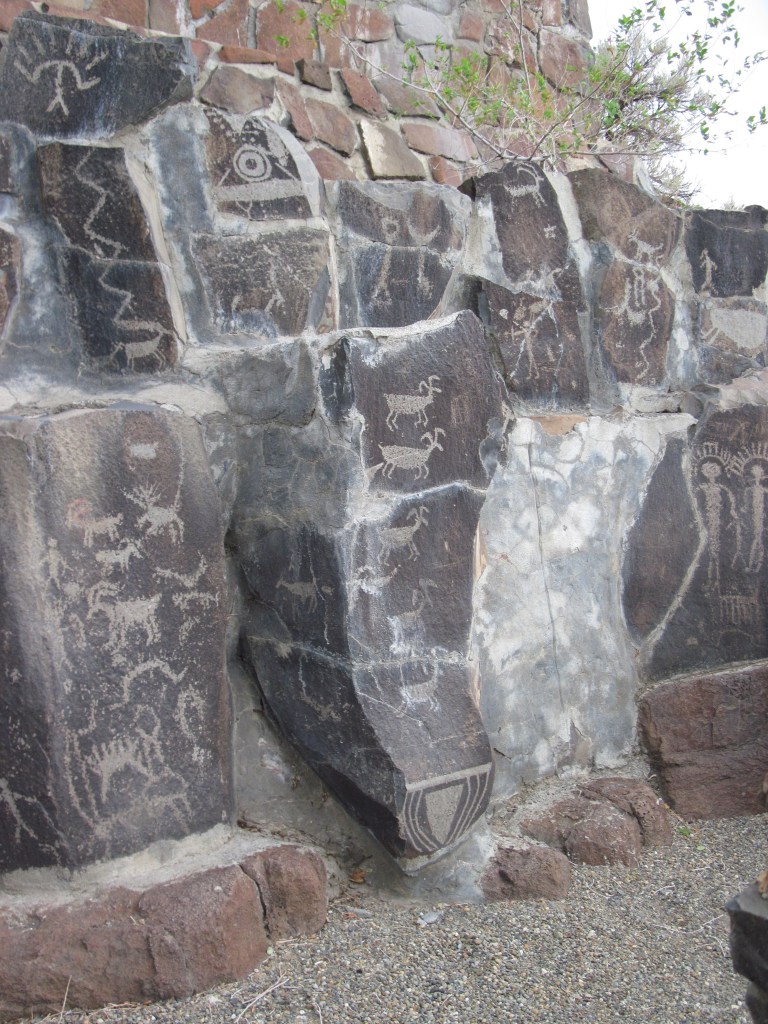
Comments about other annual observances and celebrations
Origins and Extinctions Days comprises collaborative efforts by accomplished individuals with a contemplative-activism, focused on developing integrative, transdisciplinary methods to effect cultural change and promote the survival of vulnerable cultures and species.
Origins and Extinctions Days can be considered complementary to and not duplicating (albeit with some overlap in purpose) the annual observances and celebrations such as World Environment Day, Earth Day, and The International Day of the World’s Indigenous Peoples.
In 1972, the United Nations declared 5 June to be celebrated as “World Environment Day,” which helps showcase the endeavors of the United Nations Environment Programme, and is designated as a day to do something for the environment (http://www.un.org/en/events/environmentday/index.shtml).
Although WED is recognized officially by over 100 countries it seems to duplicate functions of “Earth Day.”
The UN also has observed “The International Day of Biodiversity” every year since 2002, on May 22: https://www.un.org/en/observances/biological-diversity-day
The Earth Day Network sponsors “Earth Day,” celebrated on 22 April annually (http://www.earthday.org/).
The activism of Earth Day Network includes issues such as climate change, green cities and schools, reforestation and endangered species.
The International Day of the World’s Indigenous Peoples was declared, observed, and celebrated by the UN in 1994, and has been celebrated annually on 9 August.
The website is at http://www.un.org/en/events/indigenousday/index.shtml.
Annual themes to “indigenous day,” all of which seem important, can be found at http://www.un.org/en/events/indigenousday/pastobs.shtml
In 2015, the UN produced a Declaration on the Rights of Indigenous Peoples, which can be accessed at http://www.un.org/esa/socdev/unpfii/documents/DRIPS_en.pdf.
See also UN Declaration of Human Rights https://www.un.org/en/about-us/universal-declaration-of-human-rights
See also related UN documents: http://www.un.org/en/events/indigenousday/resources.shtml.
Note that the Native American Heritage Day Act of 2008, signed by President George W. Bush, designated the first Friday after Thanksgiving, as Native American Heritage Day.
Other UN Declarations & Entities:
-
UN Decade on Ecosystem Restoration
-
The United Nations Decade of Ocean Science for Sustainable Development
-
International Mountain Day
-
International Day of Forest
-
World Wildlife Day
-
International Mother Earth Day
-
World Oceans Day
-
World Press Freedom Day
-
International Day for Biodiversity
- UNEP Situation Room
- UNEP Development Goals
- UNFCCC
- Future Earth
- IPCC
- IPCC Assessment Report
See also
- Earth Charter at https://earthcharter.org/
- Earth Law Center at https://www.earthlawcenter.org/
- Intergovernmental Science-Policy Platform on Biodiversity and Ecosystem Services, IPBES at https://www.ipbes.net/

Team Biosphere!

 ORIGINS AND EXTINCTIONS